Vegetarian Protein Sources: The Best Foods, How Much You Need and a Sample Day
The best vegetarian protein sources ranked by grams per serving, how much protein you need to build muscle, and a sample day that hits about 115 g.
The short answer
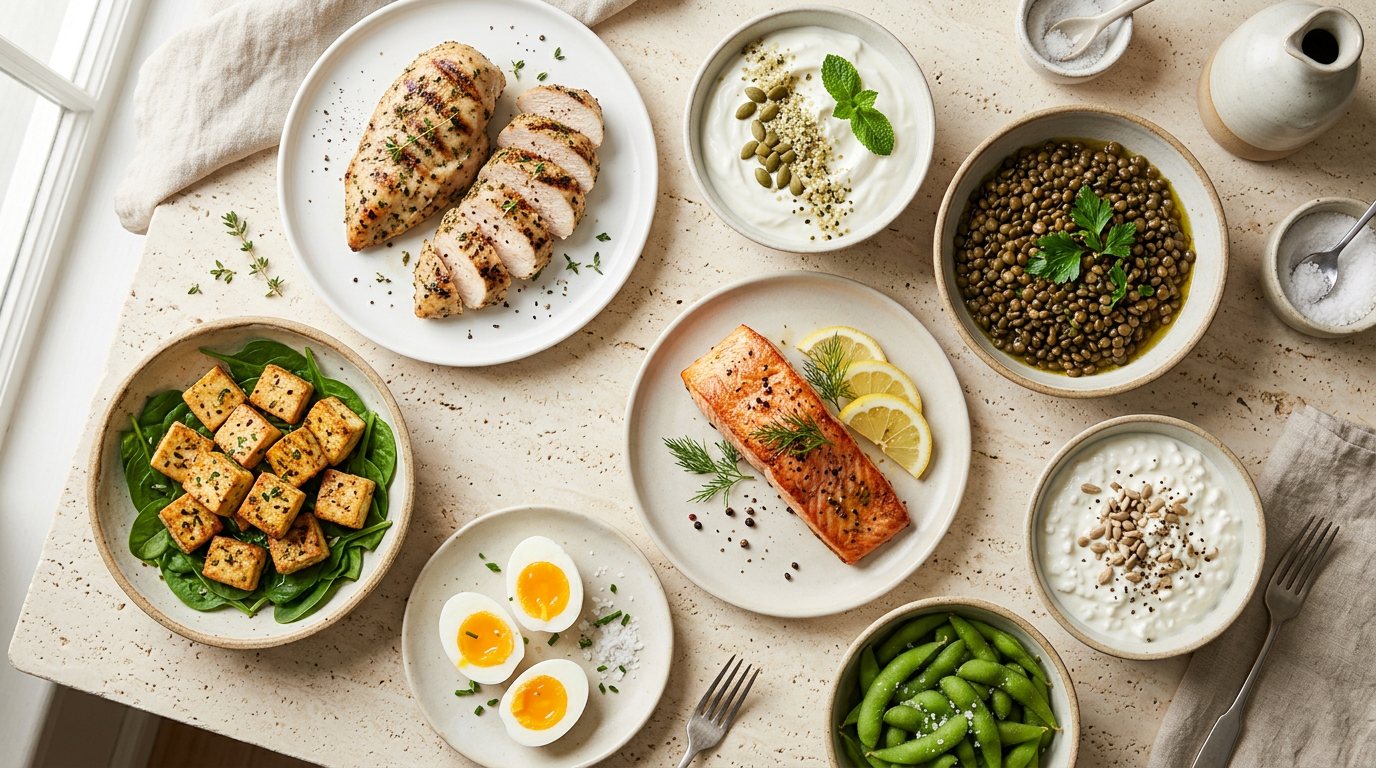
- The richest everyday vegetarian protein sources per serving are textured vegetable protein (~38 g per 150 g), tempeh (~27 g), seitan (~24–27 g) and firm tofu (~21 g), followed by edamame, cottage cheese, lentils and eggs.
- Vegetarians who lift need the same amount as anyone else: about 1.6 g per kg of body weight a day, within the ISSN's 1.4–2.0 g/kg range.
- A 12-week trial found vegans eating 1.6 g/kg gained the same leg muscle and strength as omnivores at the same intake. Hitting the total matters more than the source.
Going vegetarian doesn't mean giving up on strength or muscle. It does mean you have to be a little more deliberate, because many plant foods carry less protein per bite than meat or fish. The fix is simple: know which foods do the heavy lifting, put one at every meal, and check your daily total now and then.
How much protein do vegetarians need?
The same as everyone else. The basic RDA is 0.8 g per kg of body weight a day, but that's set to prevent deficiency, not to build muscle. For people who train, the International Society of Sports Nutrition says 1.4–2.0 g/kg a day is enough for most (ISSN position stand, 2017), and a meta-analysis of 49 trials found gains in lean mass levelled off at about 1.62 g/kg (Morton et al., 2018).
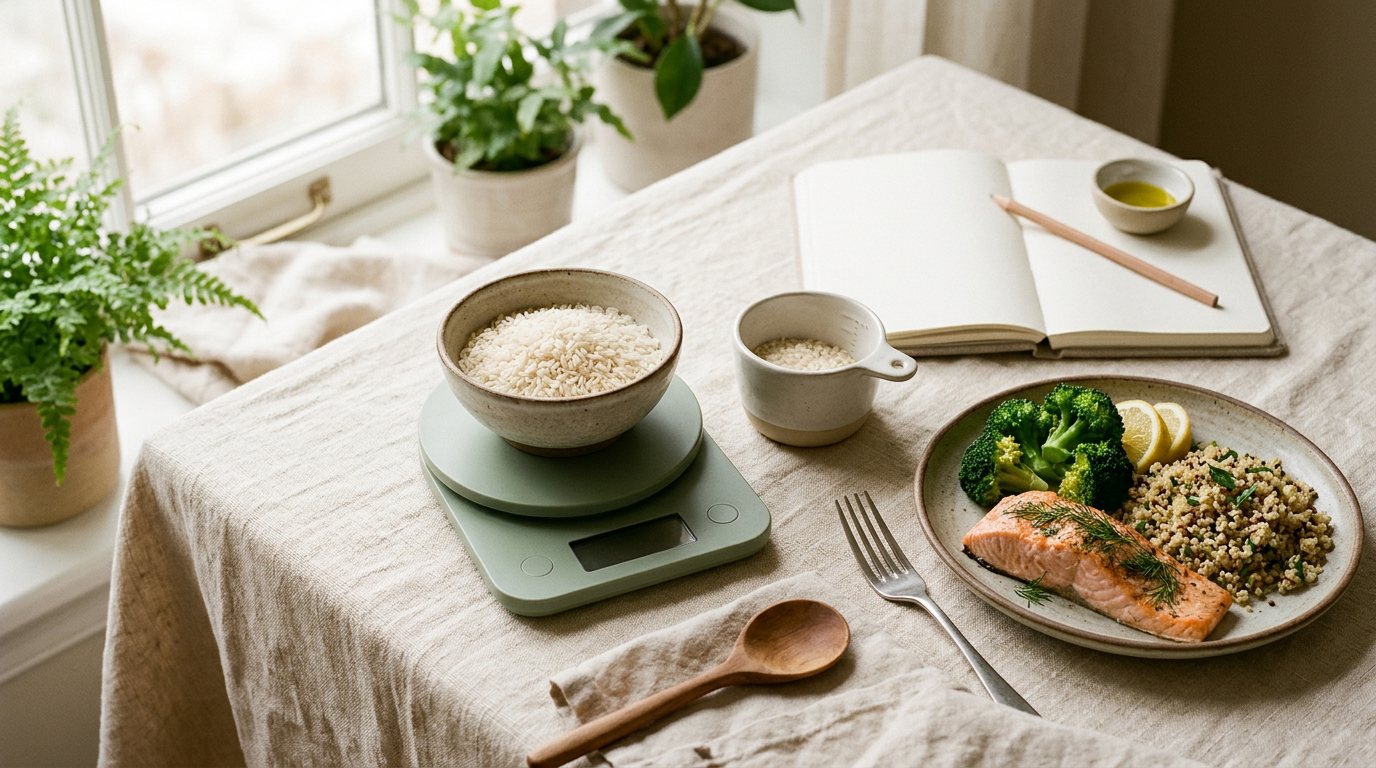
For a 70 kg (154 lb) person, 1.6 g/kg works out to about 112 g a day. Our protein chart by body weight shows the number for other sizes. Split it across your meals: the ISSN suggests 20–40 g per meal, every 3–4 hours.
Can vegetarians build muscle as well as meat eaters?
Yes, when they eat enough protein. In a 2021 trial in Sports Medicine, 19 habitual vegans and 19 omnivores did 12 weeks of supervised lifting twice a week, with everyone's protein set at 1.6 g/kg a day (topped up with soy protein for the vegans and whey for the omnivores). Both groups gained about 1.2 kg of leg lean mass, and there were no differences between groups in muscle size or leg-press strength (Hevia-Larraín et al., 2021).
A 2018 meta-analysis of 9 studies and 266 people reached a similar conclusion: supplementing with soy protein during strength training produced similar gains in strength and lean mass as animal protein (Messina et al., 2018). The Academy of Nutrition and Dietetics also states that appropriately planned vegetarian and vegan diets are nutritionally adequate, including for athletes (Academy of Nutrition and Dietetics, 2016).
The best vegetarian protein sources, ranked
Here's how common vegetarian foods compare per typical serving. Values come from Health Canada's Nutrient Value of Some Common Foods and an Alberta Health Services dietitian handout for foods Health Canada doesn't list. Brands vary, so check the Nutrition Facts table on the package.
Protein per typical serving
| Food | Serving | Protein | Good to know |
|---|---|---|---|
| Black beans, canned | ¾ cup (175 mL) | 11 g | Also ~12 g fibre |
| Plain yogurt, 1–2% | ¾ cup (175 mL) | 10 g | Greek styles are usually higher; check the label |
| Pumpkin seeds | ¼ cup (60 mL) | 9 g | Easy salad or oatmeal topper |
| Chickpeas, canned | ¾ cup (175 mL) | 9 g | Roast them for a snack |
| Milk, 2% | 1 cup (250 mL) | 9 g | Lacto-vegetarians only |
| Almonds | ¼ cup (60 mL) | 8 g | About 208 kcal, so portion them |
| Peanut butter | 2 tbsp (30 mL) | 7–8 g | Calorie-dense: ~184–191 kcal |
| Soy beverage, unsweetened | 1 cup (250 mL) | 7 g | Most other plant milks are far lower |
| Hemp hearts | 2 tbsp (30 mL) | 7 g | Stir into yogurt or oats |
Notice that legumes give you more than protein. A ¾-cup serving of canned black beans has about 12 g of fibre; here's how much fibre you need per day. Canada's food guide recommends trying to choose plant-based protein foods every day because they can provide more fibre and less saturated fat (Canada's food guide).
A sample high-protein vegetarian day (~115 g)
This lacto-ovo vegetarian day reaches roughly 115 g of protein, about 1.6 g/kg for a 72 kg (159 lb) person. Swap dairy for soy yogurt and extra tofu or tempeh if you're vegan.
| Meal | What's on the plate | Protein |
|---|---|---|
| Breakfast | ¾ cup plain yogurt + 2 tbsp hemp hearts + 1 cup unsweetened soy beverage | ~24 g |
| Lunch | Lentil salad: ¾ cup lentils, 50 g feta, whole wheat pita | ~26 g |
| Snack | ½ cup edamame + ¼ cup almonds | ~17 g |
| Dinner | 150 g tempeh stir-fry with 1 cup brown rice and vegetables | ~33 g |
| Evening | ½ cup 1% cottage cheese with fruit | ~15 g |
| Total | ~115 g |
If you track macros, set protein first and build the rest of the day around it; our beginner's guide to counting macros walks through it.
Simple ways to get more protein as a vegetarian
Easy upgrades
- 1
Anchor every meal
Start each meal with one of the top foods above (tofu, tempeh, lentils, eggs, cottage cheese) and build the plate around it.
- 2
Lean on soy
Tofu, tempeh, edamame and soy beverage are among the most protein-dense plant foods, and soy was the protein used in the trials above.
- 3
Choose higher-protein swaps
Unsweetened soy beverage instead of almond or oat drinks, and Greek or high-protein yogurt instead of regular. Compare Nutrition Facts tables.
- 4
Add a protein snack
Aim for at least 10 g at snacks, as Alberta Health Services suggests: edamame, roasted chickpeas, cottage cheese or a handful of pumpkin seeds.
- 5
Use a powder if it helps
Pea or soy protein powders are just convenient food. Useful on busy days, not required.
If you eat no animal foods at all, Canada's food guide advises including foods and beverages fortified with vitamin B12, since B12 is only found naturally in animal-based foods (Canada's food guide). If you have a health condition or questions about supplements, talk to your doctor or a registered dietitian.
Frequently asked questions
What vegetarian food has the most protein?
Among common foods, textured vegetable protein (about 38 g per 150 g), tempeh (about 27 g per 150 g), seitan (about 24–27 g) and firm tofu (about 21 g per 150 g) are the most protein-dense. Soybeans, edamame and cottage cheese follow.
Can you build muscle as a vegetarian?
Yes. A 12-week trial found vegans eating 1.6 g of protein per kg a day gained the same leg muscle and strength as omnivores eating the same amount. Total protein and consistent strength training matter most.
Do vegetarians need to combine proteins at every meal?
No strict combining is needed. Eating a variety of protein sources across the day, especially soy and legumes, covers your essential amino acids. Slightly larger portions help offset the lower leucine in some plant proteins.
How can a vegetarian get 100 g of protein a day?
Put a protein-rich food at every meal and add one or two protein snacks. For example: yogurt with hemp hearts, a lentil salad, edamame, a 150 g tempeh or tofu dinner and cottage cheese gets you past 100 g.
Sources
- Health Canada. Nutrient Value of Some Common Foods (2008): Legumes, Nuts and Seeds
- Health Canada. Nutrient Value of Some Common Foods (2008): full tables incl. dairy and eggs
- Alberta Health Services, Nutrition Services. Adding Calories & Protein (Plant Foods) (2025)
- Health Canada. Canada's food guide: Eat protein foods
- Jäger R. et al. (2017). International Society of Sports Nutrition Position Stand: protein and exercise. JISSN 14:20
- Morton R.W. et al. (2018). Protein supplementation and resistance-training gains: systematic review and meta-analysis. Br J Sports Med 52(6):376–384
- Hevia-Larraín V. et al. (2021). High-protein plant-based diet versus a protein-matched omnivorous diet to support resistance training adaptations. Sports Med 51(6):1317–1330
- Messina M. et al. (2018). No difference between soy and animal protein supplementation on gains in muscle mass and strength. Int J Sport Nutr Exerc Metab 28(6):674–685
- Melina V., Craig W., Levin S. (2016). Position of the Academy of Nutrition and Dietetics: Vegetarian Diets. J Acad Nutr Diet 116(12):1970–1980
This article is general information, not medical advice. If you have a health condition, are pregnant, or take medication, talk to your doctor or a registered dietitian before changing how you eat or train.